
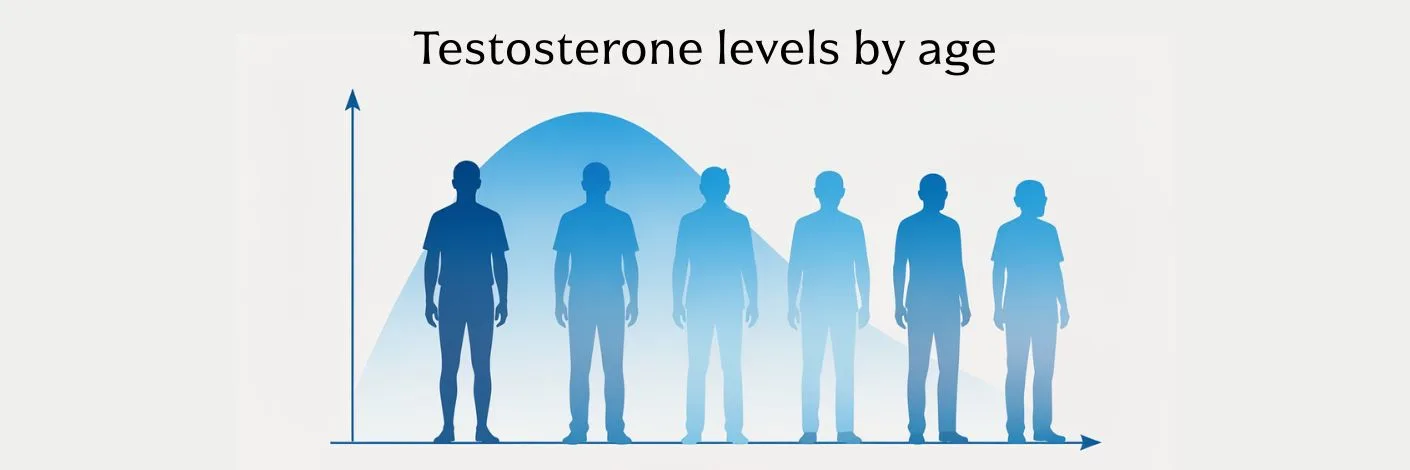



Testosterone Levels By Age are very important for men’s energy, muscle mass, mood, sexual health and overall health. This full guide shows you what normal testosterone levels are for each age group, how they change from your 20s to your 50s and beyond, and what is really healthy for your body. People often call testosterone the “male hormone,” but it’s much more than that. It has an effect on everything, from your metabolism to your self-esteem. You are not the only one who has ever thought that your low libido, low energy or stubborn belly fat might be caused by hormones. Understanding Testosterone Levels By Age tells you what’s normal, what’s not, and when you need to do something. Let’s go deep.
What Is Testosterone and Why Does It Matter?
Testosterone is the main male sex hormone, and it is made mostly in the testes. It is very important for:
- Strength and size of muscles
- Density of bones
- The way fat is stored and used
- Sexual desire and function
- Fertility and the making of sperm
- Confidence and mood stability
- Energy and drive
There are different kinds of testosterone:
- Total testosterone levels: The total amount of testosterone in the blood.
- Free testosterone levels: Are the biologically active parts that tissues can use.
- Bioavailable testosterone: Is free testosterone and hormone that is loosely bound and can be used by the body.
A testosterone blood test usually looks at total testosterone, but symptoms may be more closely linked to free or bioavailable testosterone.
Testosterone Levels By Age: What’s Normal?
Testosterone naturally rises during puberty, peaks in early adulthood, and gradually declines over time. However, “normal” ranges are broader than most people expect.
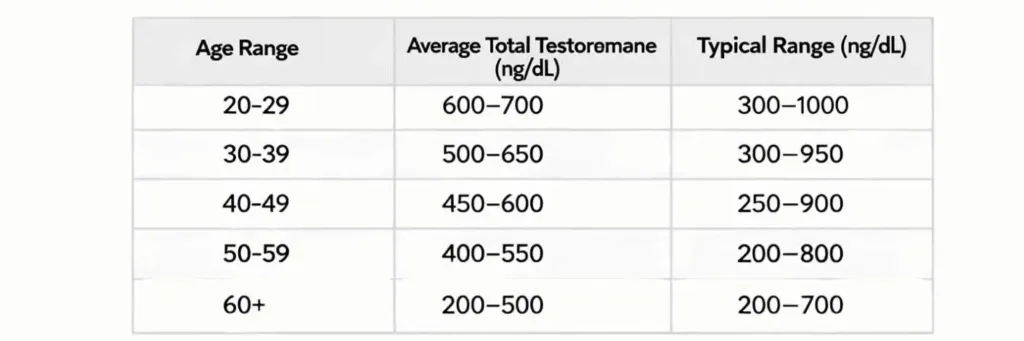
Average Testosterone Levels By Age Chart
The chart below shows the normal testosterone levels for adult men by age:
Important: The reference ranges for labs are not the same. A number alone doesn’t tell you how healthy you are; symptoms and overall hormone balance are just as important.
Testosterone Peak Age Male: When Levels Are Highest
Most men have the highest levels of testosterone between the ages of 18 and 25. At this point:
- It’s easier to gain muscle.
- You heal faster after working out.
- Most of the time, libido and sexual function are at their best.
- It feels like my energy levels are naturally high.
After the mid-20s, testosterone levels start to drop slowly, usually by about 1% a year. That doesn’t mean men suddenly lose their energy; lifestyle factors often have a bigger effect on levels than age itself.
Testosterone Levels By Age Men: What Happens Each Decade
In Your 20s: The Peak Phase
This decade is usually when hormone health is at its best. Common characteristics:
- High metabolism and the ability to build muscle.
- Strong sex drive.
- Good recovery from stress and exercise.
But even younger men can have low testosterone levels because of modern lifestyle choices like not getting enough sleep, being stressed, drinking too much alcohol, or being overweight. A lot of men don’t realize how much sleep and food affect testosterone levels. Chronic late nights or a lot of stress can lower levels a lot.
In Your 30s: Subtle Changes Begin
A lot of men in their 30s don’t notice big changes, but things do change inside. Possible changes:
- A small drop in morning erections or sex drive.
- If you don’t make the most of your lifestyle, your body fat will slowly rise.
- It takes longer to recover from workouts.
Real-world observation: Men who eat well and work out regularly often have testosterone levels that are close to those of men in their 20s. Important things that affect:
- Stress and testosterone levels are closely linked.
- Long-term stress raises cortisol levels, which lowers testosterone levels.
- The quality of sleep becomes more and more important.
In Your 40s: Hormone Awareness Stage
By the 40s, testosterone levels vary more noticeably between people of different ages. Some men feel almost the same, but others notice:
- Less energy or drive.
- Changes in mood.
- Less muscle mass.
- Feeling tired and having too much or too little testosterone.
Lifestyle habits that have been built up over decades start to have stronger effects on hormones. Men often have hormone imbalances because they are overweight, have insulin resistance, or have metabolic problems.
In Your 50s and Beyond: Natural Decline vs Low Testosterone
The rate of testosterone decline becomes more noticeable after age 50. Normal aging may include:
- Less sexual desire.
- A small drop in strength.
- Changes in how you sleep.
- But bad symptoms don’t have to happen.
Some signs that testosterone levels are low are:
- Constant tiredness
- Brain fog or trouble focusing
- Loss of muscle mass
- More fat on the body
- Low libido that isn’t caused by mental health issues
- Changes in mood or being irritable
A testosterone blood test can help figure out if levels are below healthy levels for your age if the symptoms are strong.
Total vs Free Testosterone: Why Both Matter
A lot of men only care about their total testosterone levels, but free testosterone levels are just as important. This is why:
- Testosterone that is attached to proteins may not be able to do anything in the body.
- Free testosterone has a direct effect on energy, mood, and sex drive.
- Aging often reduces free testosterone faster than total levels.
When interpreting testosterone lab tests, you should think about:
- SHBG (sex hormone-binding globulin)
- Percentage of free testosterone
- Numbers and symptoms together
Symptoms of Low Testosterone by Age
Symptoms differ based on individual biology but typically encompass:
- Low energy and drive
- Low desire for sex
- Problems with getting an erection
- Mood swings or depression
- Loss of strength in muscles
- More fat around the stomach
- Less fertile
A lot of men think that normal aging is the same as hormone deficiency. The main difference is how bad and how long it lasts.
Lifestyle and Natural Testosterone Optimization
Many men can raise their levels naturally before thinking about testosterone replacement therapy.
Resistance Training
There is a strong link between exercise and higher testosterone levels. Heavy compound lifts work really well.
Improve Sleep
During deep REM cycles, sleep and testosterone levels are at their highest.
Manage Stress
Less cortisol means a better balance of hormones.
Nutrition
Include protein, healthy fats, and micronutrients. These testosterone-boosting smoothie recipes are easy to make and could help you.
Body Fat Reduction
There is an inverse relationship between obesity and testosterone levels. Fat cells turn testosterone into estrogen.
Does Sexual Activity Affect Testosterone?
A lot of men are worried about how often they ejaculate and how much testosterone they have. Studies show:
- Short-term abstinence may induce minor fluctuations.
- Ejaculating every day does not permanently lower testosterone levels.
Read this if you want to know about common myths:
Sleep, diet, stress, and body composition have a much bigger effect on hormones than how often you ejaculate.
Testosterone Replacement Therapy (TRT): When Is It Needed?
If the following conditions are met, TRT may be considered:
- Total testosterone is always less than 300 ng/dL
- The symptoms are important.
- Lifestyle optimization doesn’t work
- But TRT is not a quick fix.
It needs:
- Checking on a regular basis
- Tests on blood
- Medical care
- Knowing how it affects fertility
Testosterone and fertility are connected; testosterone replacement therapy (TRT) can lower sperm production. Making decisions that are fair is very important.
Conclusion
- Testosterone levels are highest in the 20s.
- After age 30, things start to go down slowly.
- Levels are greatly affected by lifestyle.
- Symptoms are more important than just numbers.
- Before therapy, natural optimization should come first.
- Getting older doesn’t mean you have to be deficient.
- Understanding testosterone levels by age will help you, not scare you.
Hormones change all the time. They react to how you sleep, how stressed you are, and how healthy your metabolism is. Get tested the right way if you’re worried. Look at the results in context. Don’t just look at a lab value; pay attention to your strength, energy, and overall health. You don’t want to keep chasing the testosterone you had in your 20s. The goal is to be healthy, strong, functional, and confident at all stages of life.
Add comment